

Eames Pavilion System
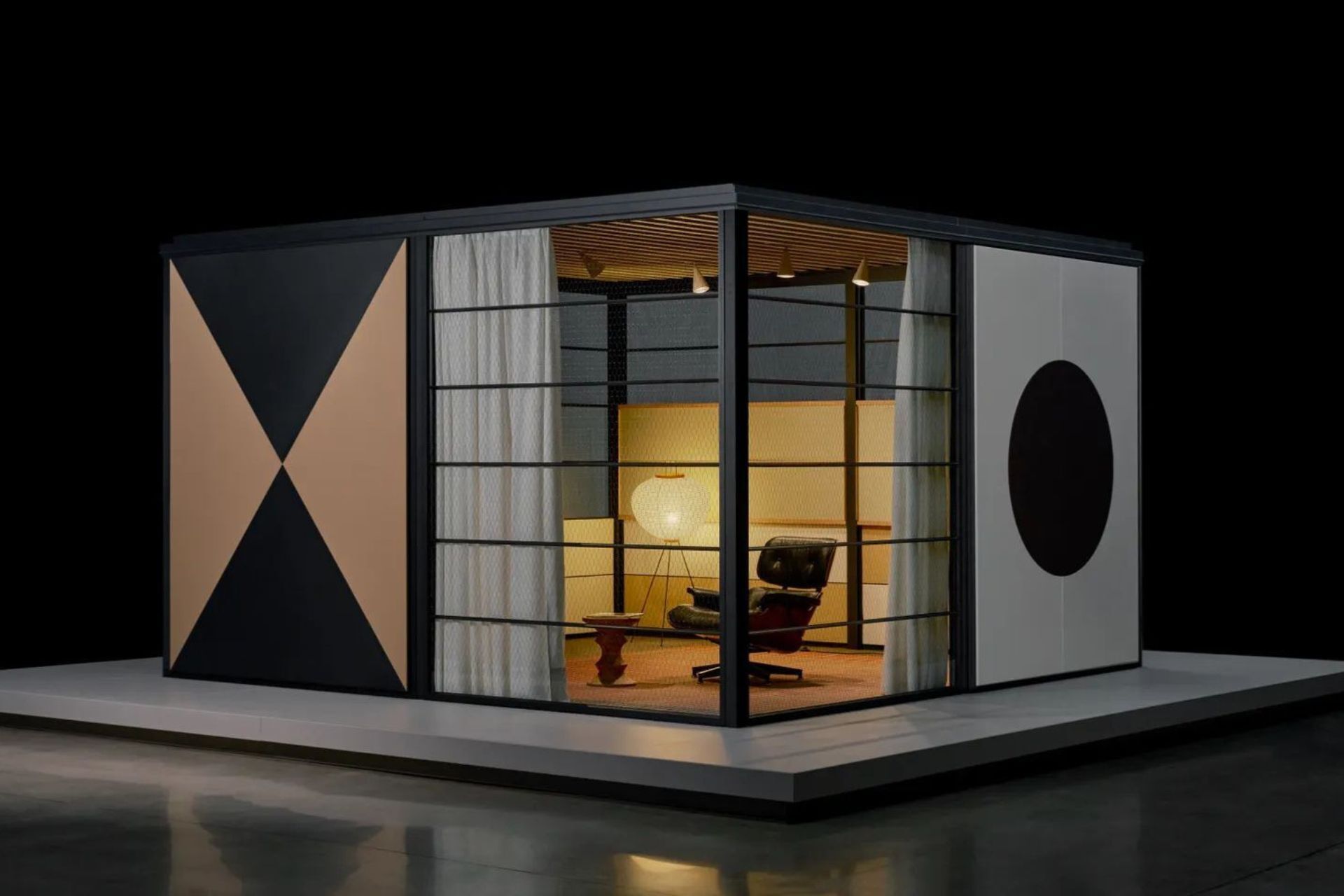
In 1944, Charles Eames argued in Arts & Architecture magazine that the postwar housing crisis could only be solved by large-scale industrial production. Five years later, he and Ray built Case Study House #8 in Pacific Palisades, the black-steel, color-panel icon that became one of the most photographed homes of the 20th century. They always meant it as a system that could be built anywhere, by anyone. Now, the Eames Office and Barcelona manufacturer Kettal have turned that vision into a product. After three years of archival research that surfaced previously unseen Eames housing designs, including an unrealized flat-pack Supermarket House concept and an unbuilt California dome, they developed the Eames Pavilion System, debuting at the Triennale di Milano later this year. It swaps the original steel for weather-resistant aluminum I and H beams, infilled with glass, polycarbonate, and wood panels, triple-glazed and built for any climate. Configurations start from a compact 170-square-foot interior studio, scaling up to multi-bay layouts and, eventually, a full two-story house. Available in more than 80 countries with a Kettal specialist on-site for every build.