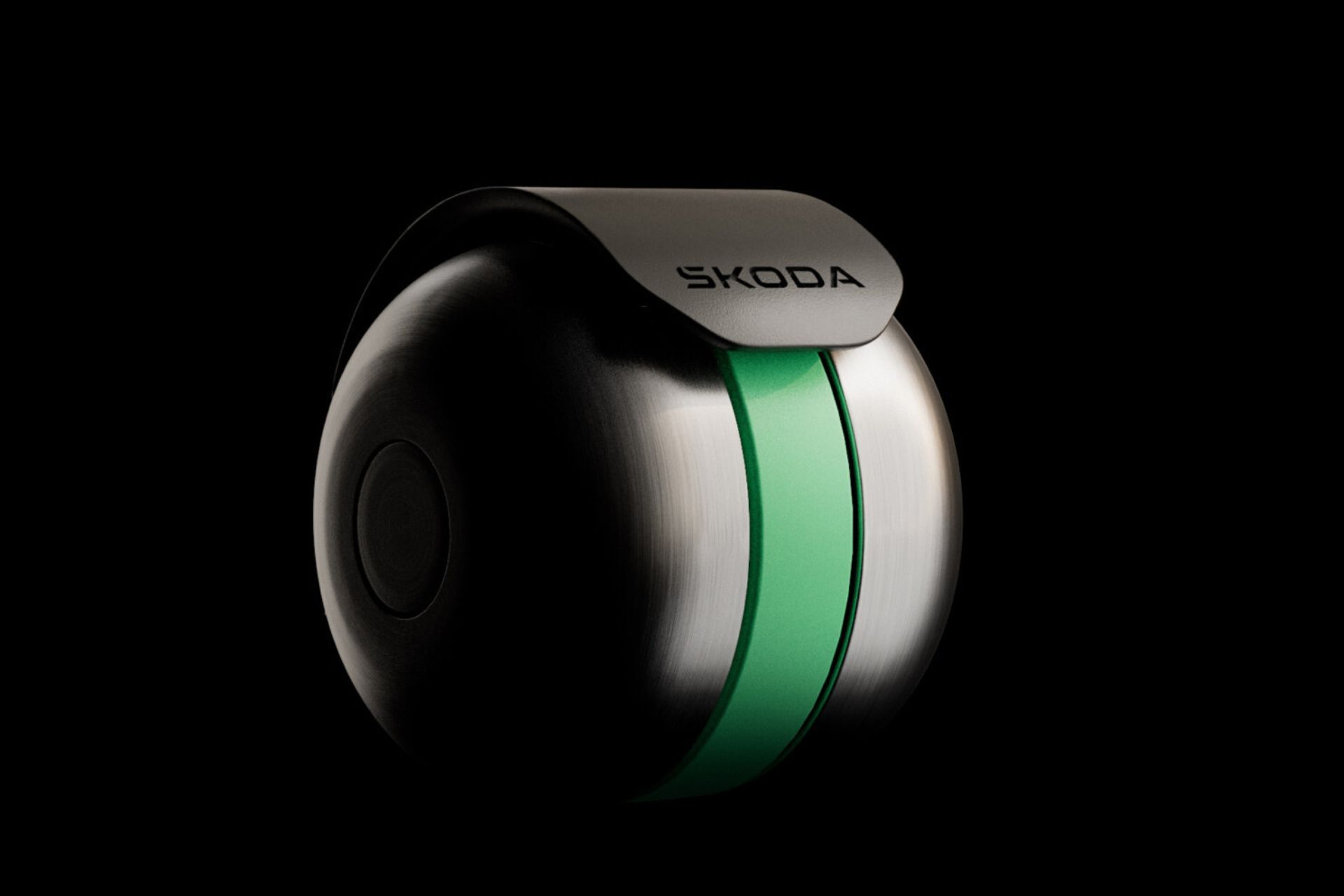
Skoda DuoBell
The bicycle bell has gone more than a century without a meaningful upgrade, but the use of noise-canceling headphones correlating to the rise in cyclist-pedestrian collisions demands a new approach. Škoda, working with acoustic scientists at the University of Salford, found a narrow frequency band between 750 and 780 Hz that ANC algorithms struggle to suppress, and built a bell around it. The fully mechanical DuoBell emits sound at that frequency, with a secondary resonator tuned higher and a specially designed hammer mechanism that produces rapid, irregular strikes too fast for noise-canceling software to process. Testing showed that pedestrians wearing noise-canceling headphones gained up to 72 feet of additional reaction distance when the DuoBell was ringing.